
JPS Scrutiny Panel Praises Officers and advocates for Higher Standards of Communication
By Montell Neufville, Chair and Facilitator, JPS Scrutiny Panel


The latest meeting of the JPS Scrutiny Panel overseeing armed police roads police and the dogs unit of the Beds, Cambs and Herts collaboration unity (known as the Joint Protective Services JPS police unit) provided strong evidence of the professionalism, restraint and commitment demonstrated daily by officers across police division.
Panel members reviewed four separate body-worn video encounters involving members of the public. Pleasingly, all four encounters were assessed as green, indicating that officers performed to a high standard and that their actions were judged to be appropriate, proportionate and professional.

The panel was particularly encouraged by how officers performed against the PLANTER framework, a nationally recognised assessment tool used by community scrutiny panels when reviewing police encounters and use of force incidents. Developed to support fair and consistent scrutiny, PLANTER examines whether police actions were:
P – Proportionate
L – Limited in duration
A – Appropriate to the actions of the individual
N – Necessary
T – The minimum appropriate Type of force or intervention
E – Ethical
R – Reasonable overall
The framework helps independent community members assess whether police actions were justified while ensuring officers receive consistent and constructive feedback. On each of the four videos reviewed, officers demonstrated good decision-making and an appropriate application of powers.
The panel wishes to place on record its appreciation for the officers involved. Policing is often conducted in challenging, unpredictable and sometimes confrontational circumstances. Officers are required to make difficult decisions quickly while balancing public safety, the law and the rights of those with whom they engage.
However, while the overall assessments were positive, the panel identified one recurring concern across several encounters: the use of swearing and unnecessarily offensive language by officers.
As someone who has been involved in police recruitment, training, community scrutiny and officer development for many years, I have consistently highlighted that communication is the most important tool available to a police officer. The words officers choose can have a significant impact on how an encounter unfolds.
Police officers receive training in communication skills, conflict management and de-escalation techniques. The purpose of that training is to reduce tension, gain cooperation and lower the likelihood of situations deteriorating into confrontation. While members of the public may at times use abusive or offensive language, officers are expected to maintain professional standards and demonstrate leadership through their conduct.
Poor language can undermine an otherwise positive interaction. It risks escalating situations that might otherwise be resolved calmly and can damage public confidence, particularly where body-worn video footage is later reviewed by community panels, supervisors or oversight bodies.
The role of the JPS Scrutiny Panel is not simply to identify where officers have gone wrong. Our purpose is to assess the quality of police encounters, recognise good practice and provide constructive feedback that supports continuous improvement. This mirrors areas examined by His Majesty's Inspectorate of Constabulary and Fire & Rescue Services (HMICFRS) during force inspections, where the quality of encounter provided to the public and the legitimacy of policing are part of their assessments and remain key considerations.
HMICFRS describes its role as being to "independently assess and report on the effectiveness and efficiency of police forces and fire and rescue services to make communities safer." It further states that it asks "the questions that we believe the public wish to have answered" and publishes findings and recommendations designed to improve services provided to the public.
Similarly, College of Policing guidance and the Code of Ethics emphasise professionalism, respect and ethical behaviour in all interactions. Officers are expected to communicate respectfully, remain emotionally aware and treat members of the public with dignity, regardless of the circumstances. In some cases, the inappropriate use of language may result in supervisory intervention and, where sufficiently serious, can lead to consideration by Professional Standards Departments.
The panel therefore sends two clear messages following this month's review. First, officers involved in the four encounters reviewed should be commended for their professionalism, judgement and adherence to the principles assessed under PLANTER. Secondly, forces should continue to reinforce the importance of professional language and respectful communication.
Excellent policing is not only measured by the powers an officer uses. It is also measured by how they speak, how they listen and how they treat people.
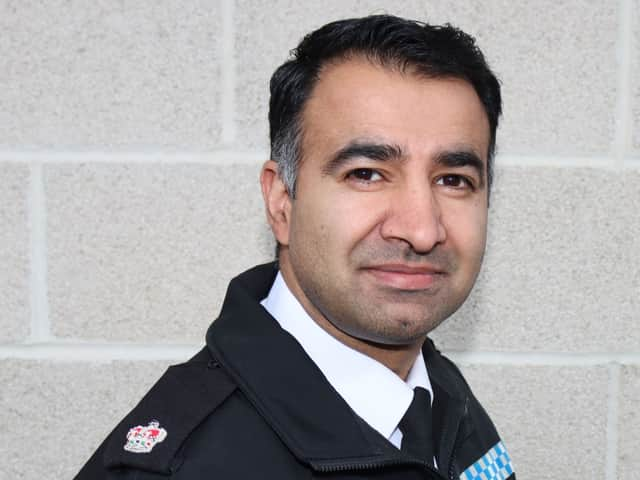
In response to the panels praise and advice on the use of language the force’s chief Superintendent Kash Hussain said ‘I welcome and accept the feedback from the panel and have shared the learning across JPS departments. The feedback reinforces the importance of professionalism, effective communication and ensuring officers understand how their language may be perceived by members of the public, particularly when viewed through a scrutiny panel lens. This learning will continue to be reflected through supervisory discussions, training and governance processes.
"We reflected on this feedback significantly within our training and leadership team, colleagues recognised the panel's concerns and considered the balance of the operational context in which some of these encounters occur. Officers are often required to act in fast-moving, high-risk and highly stressful situations where immediate control of a dangerous situation is necessary to protect the public, victims, subjects and officers themselves."
During the discussion we drew a distinction between unnecessarily offensive language, which is not supported, and language used in an attempt to gain immediate control of a dangerous situation. This is consistent with findings from the public inquiry into the death of Jermaine Baker, where Inquiry Chair Clement Goldstone QC concluded that profanity, in itself, should not be a cause for concern in moments of heightened stress, whilst also stating that language should, wherever possible, be deliberate rather than haphazard and that "dominating language" can be a legitimate use of force available to officers. See Chapter 9 of the inquiry report: The Jermaine Baker Public Inquiry
As a result of both the panel feedback and our internal discussion, we will now reiterate and continue to reinforce with officers and supervisors that language should be purposeful, proportionate and professionally justified. We will ask trainers and operational leads to incorporate this learning into future use of force, Taser, firearms and dog-handler training inputs, ensuring officers understand both the operational rationale for effective command language and the public perception that unnecessary swearing can create.
Supervisors will also be encouraged to consider language when reviewing body-worn video and use of force incidents, reinforcing good practice and addressing occasions where language may have been avoidable or added little tactical value. This approach allows us to recognise the realities of policing high-risk incidents whilst continuing to improve public confidence and professionalism’
For more information visit Att10tive.com