
Can you help fund archaeological dig of Roman villa in Bedford?
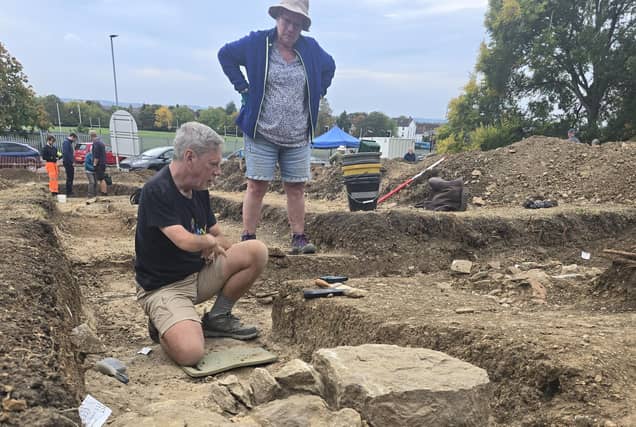

Who would have thought there would be a Roman villa on both sides of Manton Lane.
But over the past 16 years, Bedford Roman Villa Project has brought together organisations, schools, and members of the public to help professional archaeologists to uncover just that.
What’s thought to have been the east and west wings of the villa – including the villa’s bath house – were discovered as a result of building work at Edith Cavell School and the building of the Manton Heights Care Home.
The rest of the west and north wings were found in a field to the east of Bedford Modern School and in land owned by Ranc Care Homes (RCH).
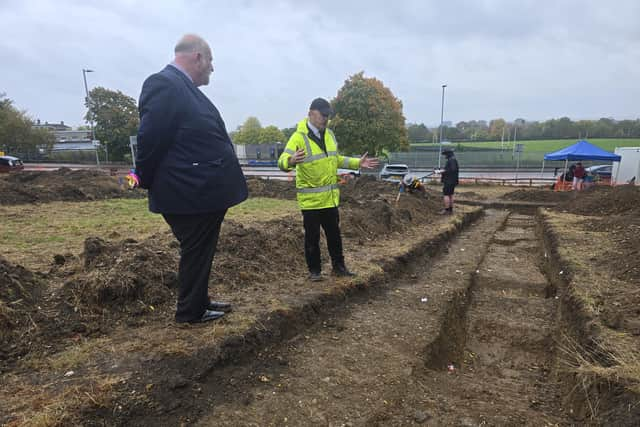
Clearly not one to rest on its laurels, Bedford Roman Villa Project is now hoping to dig further trenches over this northern range.
Dates for this year’s excavations are Saturday, September 26 to Sunday, October 11.
But funds are desperately needed – £20,000 to be exact – and the group has set up a GoFundMe to raise the loot not only for this year’s excavations, but to pay experts to write specialist reports on the finds.
Steven Cockins, chairman of the Bedford Roman Village Project, explained: "As a Roman historian living on the doorstep of this villa, who has contributed to various TV documentaries, books, and films, including Time Team, I was at the right place at the right time to coordinate a community project to investigate these Roman remains, calling upon my various contacts within the archaeological world."
The dig is supported by Bedford's Albion Archaeology volunteers, and has received cash from the Gale Family Charity Trust and Bedford councillors.
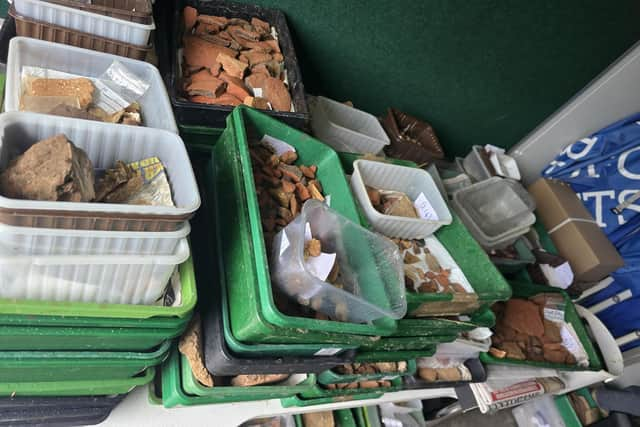
But Steven added: "These funds have not been enough to fully realise the potential of our community project, limiting the amount of time we can dig each year, and our consequent ability to process the large volume of archaeological finds we have recovered.
"Nor have these funds been enough to achieve our ultimate objective of publishing an illustrated book covering our discoveries, in order that knowledge of our national and internationally important site is made know to the widest audience possible."
And as to the national significance of this site, it’s the only known example of bas relief stucco work in the whole of the UK.
This is the type of elaborate, hand-carved plaster decoration common in the Roman town houses and thermal baths of Pompeii and Herculaneum, but extremely rare in the Western Roman Empire outside of Italy,
According to Bedford Roman Villa Project, this suggests the villa was possibly the most lavishly decorated building in late Roman Britain, and is consistent with it being the headquarters of a massive imperial estate centre located along the Ouse Valley – growing grain for the armies of Britain and the Rhine during the late 3rd and 4th centuries AD.