
Bus passenger information service may be adopted nationally following success of Bedford pilot
A Bedford pilot scheme to develop a new way of providing bus passenger information may be rolled out across the country.
Local authorities are looking at adopting the scheme following the trial which recorded 4,638 users across a single bus route at a cost of 3p per passenger – a fraction of the £18 European average spend per user on transport apps.

The interest followed a presentation of the Bedford results to England’s Economic Heartland (EEH), a partnership of 11 local authorities.
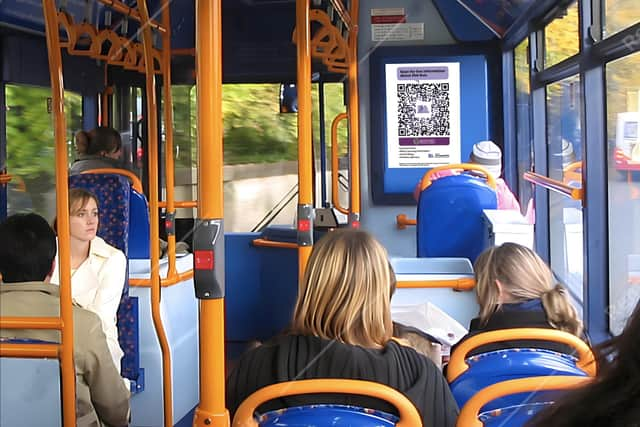
Passenger information platform Journey Alerts delivered the pilot with Bedford Borough Council, via QR code posters on one of its most popular bus
routes.
Passengers scanned a code at their stop to receive real-time information – covering bus times, delays and connections – directly through WhatsApp, with no
app download or account registration required.
By the end of the four-month trial, 4,638 people had taken part, with 50 per cent returning within one month. The platform is already configured to scale across Bedford’s wider bus network.
Nicola Gribble, Portfolio Holder for Environment at Bedford Borough Council said: “Journey Alerts’ pilot in the Bedford Borough is part of our ongoing commitment to
making public transport more accessible and reliable for everyone.
“Whether you’re a frequent traveller, someone who finds bus travel challenging, or visiting our town for the first time, this new service provides clear, real-time
information to help you get where you need to go with confidence and ease.”
Journey Alerts is built on the DfT’s Bus Open Data Service (BODS) showing local authorities where passengers board, how they travel, and how delays affect real people rather than simply reporting that a bus is running late.
The Bedford pilot results show how better access to transport information can help encourage more people to use bus transport.
Alex Froom, Chief Strategy Officer at Journey Alerts, said: “Bus passengers have been let down for too long by information that tells them a timetable exists but offers nothing when things change. The Bedford results show that when you make information easy to act on and deliver it through a channel people already use, uptake follows. More than 4,600 users from one route, with no promotion, is a strong signal of what this model can do at scale.”