
Bedford town centre to get new student policing hub to tackle 500-officer deficit
The student units are set to be introduced in 2027
Bedford town centre will soon welcome student hub policing units in an effort to increase the county’s depleted pool of officers, Chief Superintendent Ian Taylor has announced.
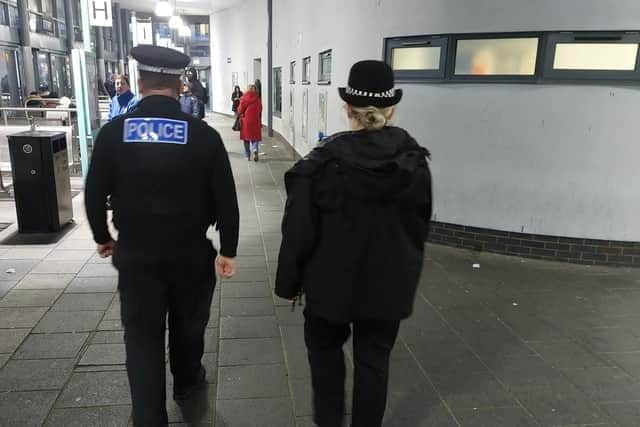

The student units, set to be introduced in 2027, will expand town centre policing in both Bedford and Luton to increase police presence in a bid to resolve some of the issues brought by years of underfunding due to the county’s rural classification, the council heard in Thursday night’s meeting (November 19).
Changes are already under way, with student hubs already introduced to Kempston and Luton police stations, bringing promises to increase police presence as a result of the student officers and their trainees.
The changes come in the wake of a new report by His Majesty’s Inspectorate of Constabulary and Fire & Rescue Services (HMICFRS), which ranked Bedfordshire Police’s performance across nine areas of policing. The findings outlined four adequate areas, four areas which require improvement and one inadequate area. The force did not receive a grading of ‘good’ or ‘outstanding in any area.
Student officers will follow a revised 20-week tutorship pathway, as they work alongside tutors and community policing teams across Bedford and Luton town centres during weeks 1-5, Superintendent Taylor explained.
At the moment the town centre team have currently six officers, [which] will rise to 20 with the advent of these student officers
During this time, tutors will support students as they transition into independent officers, while increasing visibility to the public. Throughout the remainder of the training programme, student officers will receive mentoring from experienced patrol officers, exposed to local issues and complexities of response policing, Ian Taylor announced.
He said: “The new recruits are effectively a support to our patrol officers across the county. This is a reimagining of how we will utilise those [officers]. [The hubs] will make better use of [patrol officers] in terms of crime prevention, crime protection and reassurance to the communities – because our town centres are high demand locations. We anticipate that this will create a more structured approach to policing,” he assured the council.
“At the moment the town centre team have currently six officers, [which] will rise to 20 with the advent of these student officers and their tutor constable being in the town centre. We feel that will support safer town centres.”
Concerns were raised by council members regarding drawing resources away from rural areas to train students, which Bromham ward councillor Dylan Simmons said were already facing pressures as a result of underfunded policing.
Reassuring the council, Bedfordshire’s Police and Crime Commissioner, John Tizzard, said: “We already have tutors within our student hub unit, and then our existing town centre teams are being trained as constables. These [officers are from] a separate unit, moving into the town centre from Kempston and Dunstable.”
After completion of the 20-week programme, the newly trained officers are intended to remain in the borough, Chief Superintendent Ian Taylor confirmed. “They will then move on to one of our patrol teams,” he added.
“They will remain on those patrol teams for the remainder of their student journey – which differs [depending] on their individual pathways.”
The time spent within teams can span from three years for those entering into the degree programme, or two years for those under the degree holder programme. If officers join as a result of the police’s accelerated detective pathway, they will then move into the county’s crime investigation department to develop as detectives, he said.
To support Bedfordshire’s rural crime teams, two student officers are to be placed in Riseley, Ian Taylor confirmed. “We are committed to driving an excellent service across the county.”