
How East West Rail is using drones to survey wildlife in Bedfordshire and beyond
East West Rail Company (EWR Co) is using drones to survey wildlife ahead of new construction.
The company says the new approach, which uses thermal imaging, will help protect wildlife and improve efficiency during archaelogocal investigation for the project.
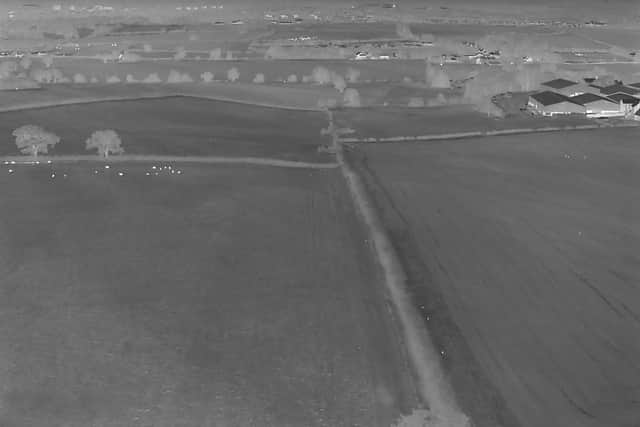

Sites are surveyed ahead of building work starting – and are then analysed with environmental professionals to detect birds and other wildlife in the area.
EWR Co says the drones can search the surrounding area in just two to three hours, allowing it to quickly clear plants, make buffer zones and continue progress when possible.
The surveying method was developed with EWR’s surveying contractor – Kier and aims to prevent disruption to wildlife and to speed up construction by reducing delays during nesting season.
So far, the drones have already detected a wide range of birds including skylarks, yellow hammers, red kites, buzzards, pheasants, woodpigeons and coots – alongside other species.
They have also found sites that are difficult to identify from ground level – such as crows’ nests.
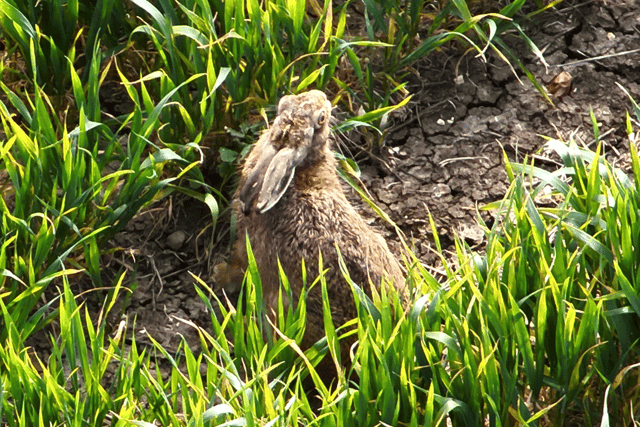
And it’s not just birds – a large number of rabbits, and a few hares, have also been found in the farmland surveyed.
EWR Co says these surveys provide crucial information for planning, construction and environmental protection.
Tristan Lincoln-Gordon, director of environment, EWR Co, said: “Protecting the environment while delivering critical infrastructure is fundamental to how we build East West Rail. By embracing innovative technologies such as thermal drone surveys, we can identify and safeguard ground-nesting birds more effectively, giving our teams greater certainty to plan and deliver archaeological works responsibly.
“This approach enables us to enhance our ecological protection measures while improving efficiency and reducing disruption to ensure the effective delivery of one of the UK’s most significant railway projects.”
Jonathan Pearce, project director for EWR at Kier, said: “At Kier, we are constantly looking for innovative ways to improve delivery, creating value through safe and sustainable outcomes.
“East West Rail shares that same forward-thinking approach, and together we’re able to develop solutions that not only improve project performance but also raise the bar for the wider industry.”
EWR says that drones will continue to be used alongside other methods to protect the environment – including the use of environmental professionals to supervise development.