
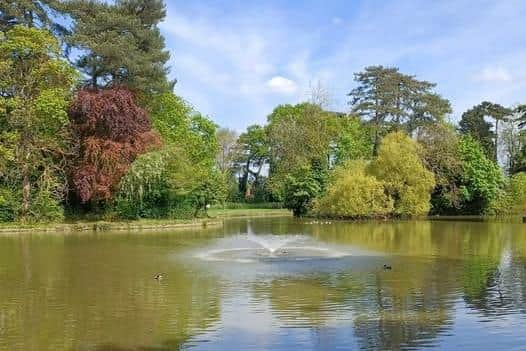
Warning over toxic algae in lake at Bedford Park
An urgent health warning has been issued over potential dangers of algae in the lake at Bedford Park.
Blue-green algae can be harmful to both people and animals with Bedford Borough Council advising visitors not to enter the water and for dog walkers to keep pets on a lead and away from the edge of the lake.
Cyanobacteria or ‘blue-green algae’ is a type of blooming algae, which can produce toxins which can kill wild animals, livestock and pets. The toxins can also harm people, producing rashes after contact with skin and illnesses if swallowed.
Symptoms of blue-green algae poisoning in dogs include vomiting, diarrhoea, disorientation, seizures, drooling, twitching and weakness.

Anyone who thinks their dog may have been poisoned by the algae is advised to contact their vet immediately.
The council is planning to install warning signs around the location, and says it will continue to monitor the situation and provide updates.
A council spokesperson added: “We have reported this to the Environment Agency, who will check oxygen levels in the lake at Bedford Park and look at opportunities to resolve the issue.
“Blue-green algae naturally occurs in small amounts in many bodies of water, and certain conditions can cause them to bloom rapidly. Hot, dry weather with little wind or rain creates ideal conditions for algae growth.
“Unfortunately, there is no easy solution to eliminating blue-green algae once a bloom has started.
“Long-term solutions often involve managing nutrient levels entering the water, such as fertilisers from surrounding land.”
The Environment Agency provides warnings for algal blooms in rivers, lakes, and seas, advising the public to avoid contact with the water or algae. During a bloom, the water becomes less clear and may look green, blue-green or greenish-brown. Scums can form during calm weather when several bloom forming species rise to the surface. This can look like paint, mousse or small clumps.
Algal blooms block sunlight from reaching other plants in the water and can also use up oxygen in the water at night which can suffocate fish and other creatures.