
Ravensden farmer counts the cost of drought with yield down by 30%
A Ravensden wheat farmer is combining generations of farming knowledge with modern soil science to combat the effects of extreme weather on crops.
Claire Donkin, who recently took over the family farm from her father, says wheat yield is down by around 30 per cent with the heatwave and drought contributing to the worst harvest on record for farmers.
But she is now trialling measures including cover crops, legumes, reduced cultivation and microbial soil testing as part of a longer-term effort to improve soil health and resilience.
She said: The hot, dry weather has put our wheat under even more pressure and our yield is around 30 per cent below what we would normally expect.
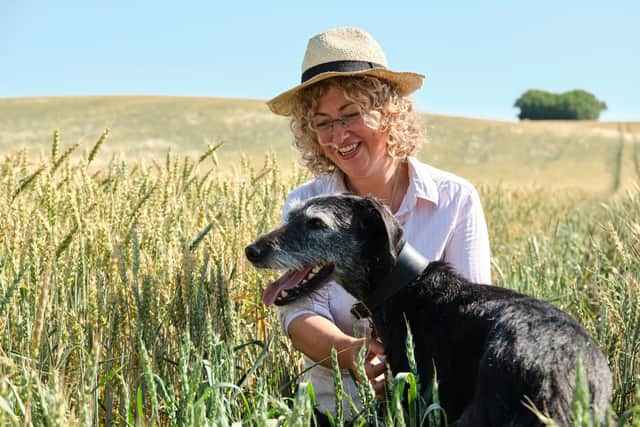

“When you have a year like this, it makes you think very hard about what you can do differently. We cannot control when it rains, but we can look after the soil and try to give the farm the best chance of coping with whatever comes next.”
Claire is one of 110 UK wheat farmers supported by pet food manufacturer Purina through Landscape Enterprise Networks (LENs). The programme helps farmers adopt practices intended to improve soil health, water management and biodiversity.
“What is interesting is that many of the principles we are coming back to are things earlier generations of farmers would recognise immediately,” added Claire.
"From rotating crops, keeping the ground covered and looking after hedgerows, it’s not new. The difference is that we can now put modern science around that knowledge.”
New research commissioned by Purina suggests there is strong support locally for some of the measures farmers are adopting.
Among adults surveyed in the East of England, nearly two thirds (60 per cent) said they would support farmers planting cover crops to help protect soil between harvests, while 35 per cent were concerned about the long-term health of British farmland and agricultural soil.
Claire says she’s already seeing some practical benefits from cover crops on her own farm.
“Our cover crops are helping reduce the amount of nitrogen fertiliser we need, cutting costs and giving us an early measurable sign that some of the changes are working.
“It does not offset a difficult summer, but it gives us something positive to build on.”
Claire said the same broad principles she uses on her farm, can also be applied to gardens and allotments; her tips include:
> Compost suitable garden and food waste.
> Use fallen leaves to make leaf mould or mulch.
> Avoid unnecessary digging.
> Keep some plants or living roots in the ground over winter.
> Leave selected seed heads and stems as habitat for wildlife.
More information of how small changes to people’s routines in their gardens can help care for soil and wildlife, is available here.