
Meet the wind-powered robot designed by Cranfield University researchers to explore hostile environments
Say hello to the WANDER-bot – a low-cost, 3D-printed robot created by the good people at Cranfield University.
But what makes it different to all your other Terminators out there is it’s powered by wind energy.
Designed to spend long spells in hostile, windy environments like deserts, polar regions or even other planets, the WANDER-bot doesn’t need a battery to power movement.
So they’ll be no talk of “I'll be back... once I’ve recharged and rebooted”.
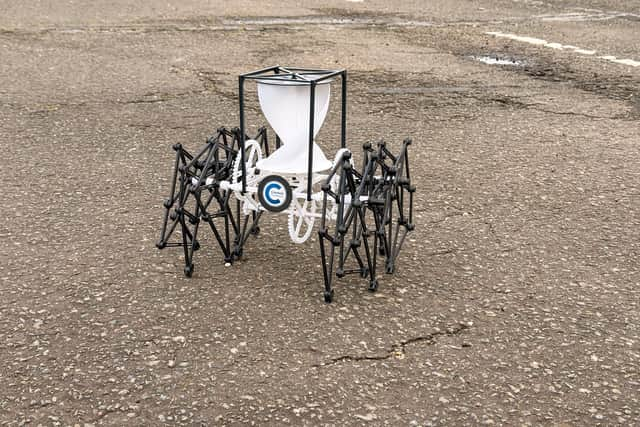

You see, movement accounts for around 20% of battery use in most robots, so running on natural energy makes WANDER-bot an efficient solution for long-term exploration or for mapping unknown terrains.
As a result, any electronic elements added to future versions for data collection or transmission purposes could have their own smaller, lighter power source.
And by using natural energy, it also counters the issue of performance degradation over time.
Designed by Dr Saurabh Upadhyay and Sam Kurian, research associate in space engineering, the robot uses parts that are entirely 3D printed, with the design deliberately simple to allow for quick repair and replacement.
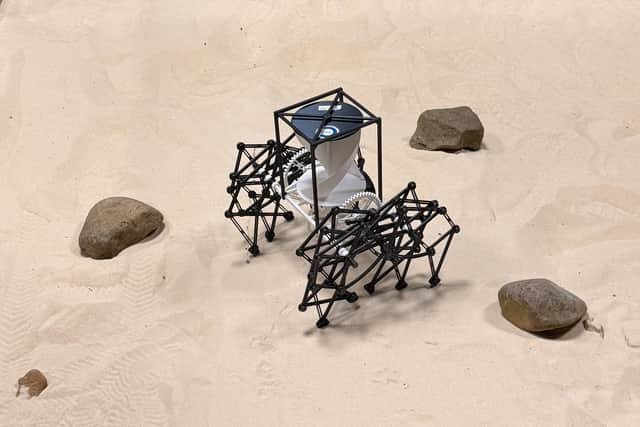
This means that, in theory, you could print and construct WANDER-bot anywhere and make replacement parts in situ as needed, removing the need for time-consuming and costly resupply missions.
Dr Upadhyay, lecturer in space engineering at Cranfield, said: “There are many challenges when it comes to robotic exploration. Battery capacity limits things like range, and technological complexity limits the ability to repair in an environment where human occupation would be minimal and their capability for manufacturing or maintenance is limited due to the harsh conditions.
“WANDER-bot is a first step towards low-cost, repairable, self-sufficient robots that can explore environments that are currently difficult for humans to reach and work in, such as other planets, or places on Earth where it’s impractical for people to spend long periods of time.”