
Bedford's Priory Country Park cleared of Himalayan Balsam
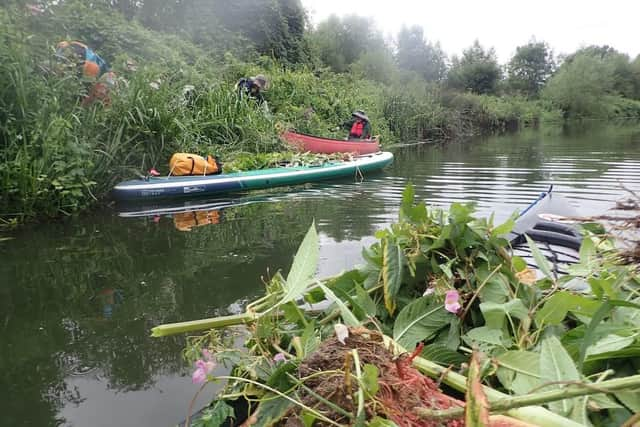
Volunteers celebrate the removal of Himalayan Balsam from Priory Country Park after a collaborative effort between Priory Country Park, Viking Kayak Club, and the local Wildlife Trust.
This year all known patches of Himalayan Balsam have finally been removed from Priory Country Park, Bedford.
This was achieved as a result of a project started in 2019 by Priory Country Park staff and volunteers, supported by Viking Kayak Club Rivercare group and the local Wildlife Trust.
Although it may look like just a pretty pink flower, Himalayan Balsam is a non-native invasive species that out-competes native flora and rapidly takes over whole riverbanks. Dying back in the winter, it then leaves bare riverbanks exposed to erosion until its prolific seeds grow in the spring.

Priory Country Park is a 360-acre open space and county wildlife site with some two miles of Great Ouse river bank plus a greater length again of backwaters and several lakes, as well as wet woodland and floodplain, all of which potentially could become overrun with Himalayan Balsam if it wasn’t stopped.
The project built systematically on previous clearance efforts and involved annual surveying for patches of Himalayan Balsam, followed by hand-pulling of plants from land and by boat. As Himalayan Balsam is shallow rooting, it is usually easy to remove by gentle pulling. The plants can then be left to dry out where they grew.
Removal is best done during June and July when the plants are big enough to spot but before they shed seeds. A follow-up check and removal as necessary in August or September can catch any plants missed earlier and any late-growing plants. Complications arise from the desirability of getting every single plant and the fact that there are often lots of nettles in the same places.
As a result of this success, the Great Ouse is now clear of Himalayan Balsam all the way through Kempston and Bedford and at least as far as Castle Mills Lock.